


Can Hormone Replacement Therapy Help With Hot Flashes When You Live in the Desert?
Updated October 2026
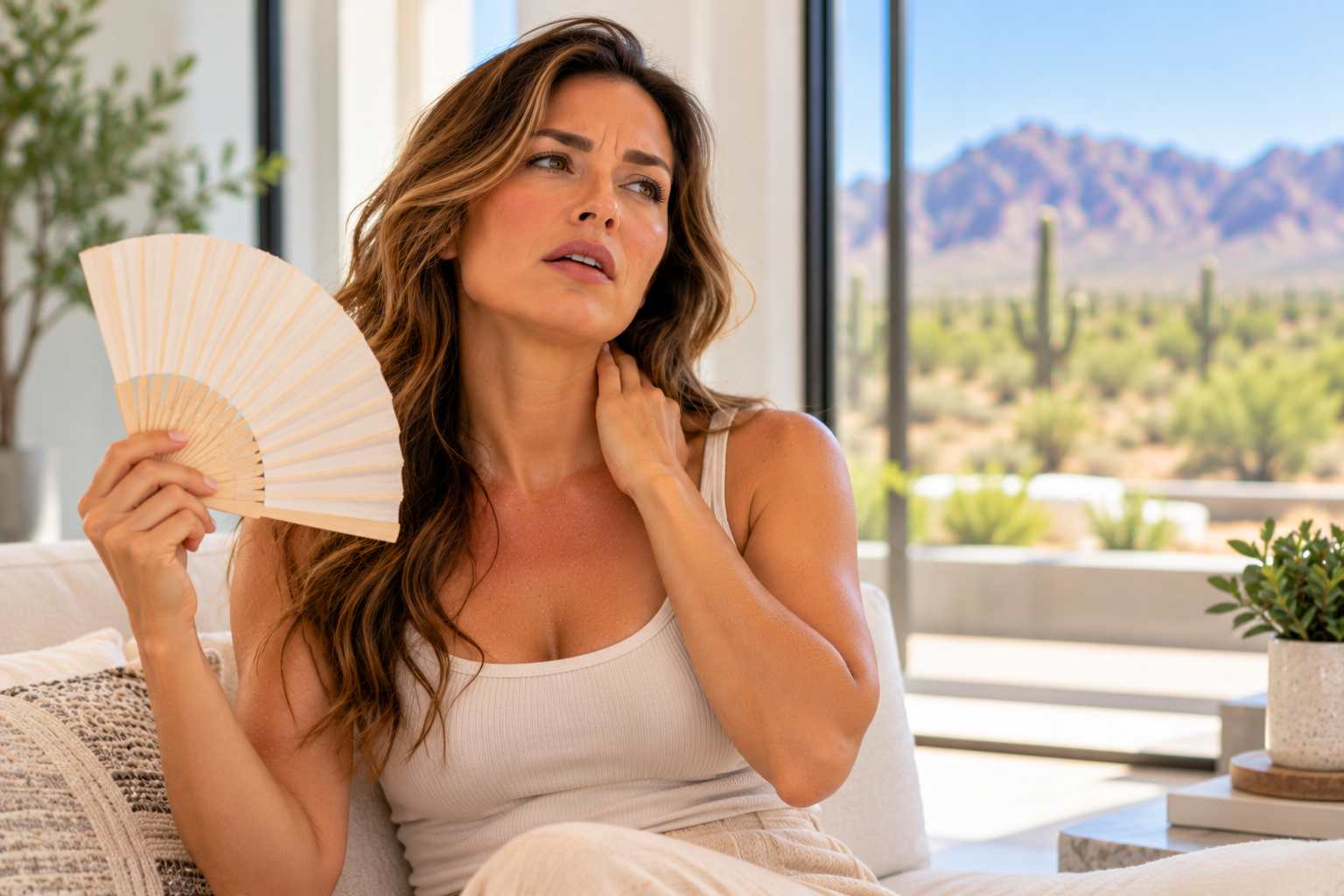
You are in the middle of a meeting, and it starts. A wave of heat rises through your chest and face, your skin flushes, and suddenly you are fanning yourself and hoping no one notices. Later that night, you wake up drenched and kick off the covers for the third time. In Scottsdale, where summer afternoons regularly push well past 100 degrees, hot flashes can feel relentless.
Hot flashes and night sweats are among the most common symptoms of perimenopause and menopause, and they can affect sleep, focus, mood, and confidence. If you have been searching for relief, you have likely come across hormone replacement therapy, often called HRT. Here is what it is, how it may help, what the risks are, and how to decide whether it is right for you.
What Causes Hot Flashes During Menopause?
Hot flashes happen when declining estrogen affects the part of the brain that regulates body temperature. The brain becomes more sensitive to small changes in heat and responds by triggering flushing and sweating to cool you down. They often begin in perimenopause and can continue for years after the final period.
MedlinePlus describes a hot flash as a sudden warm feeling in the face, neck, and chest. Night sweats are simply hot flashes that happen during sleep, and they are a major reason many women in midlife feel exhausted.
Why Hot Flashes Can Feel Worse in Arizona
Many women notice that warm environments, alcohol, caffeine, spicy foods, and stress can trigger or intensify hot flashes. In the Sonoran Desert, heat is hard to escape for much of the year. Moving between scorching parking lots and air-conditioned buildings, sitting in a hot car, or exercising outdoors can all set off an episode.
Perimenopause Can Start Earlier Than You Expect
Perimenopause, the transition leading up to menopause, often begins in the 40s and can last several years. During this time, hormone levels fluctuate unpredictably. Some women experience irregular periods, sleep disruption, mood changes, or hot flashes long before they consider themselves "menopausal."
What Is Hormone Replacement Therapy?
Hormone replacement therapy supplements hormones that decline during menopause, most often estrogen, with progesterone added for women who still have a uterus. It is one of the most effective treatments for hot flashes and night sweats. HRT can be delivered in several forms, including creams, patches, pills, injections, and pellets.
At Source of Health, hormone therapy for women may include estrogen, progesterone, and testosterone when appropriate. Every plan starts with a thorough evaluation, lab testing, and a conversation about your symptoms, history, and goals. Follow-up visits and labs help us monitor how you are responding and adjust as needed.
Why Progesterone Matters
If you still have a uterus, taking estrogen alone raises the risk of endometrial cancer. According to the FDA, adding a progestin lowers that risk. This is one of many reasons hormone therapy should always be prescribed and monitored by a qualified provider.
What Are the Benefits of Hormone Therapy?
Hormone therapy may relieve hot flashes, night sweats, and vaginal dryness, and it may help reduce the risk of osteoporosis. Many women also notice better sleep once night sweats ease. Benefits vary from person to person depending on age, health history, and the type of therapy used.
According to The Menopause Society, for healthy women who are younger than 60 or within about 10 years of menopause, the benefits of hormone therapy for bothersome symptoms generally outweigh the risks. That is an important nuance. Age, timing, and personal health history all shape whether hormone therapy is a good fit.
What Are the Risks of Hormone Replacement Therapy?
Hormone therapy carries risks, including blood clots, stroke, heart attack, breast cancer, and gallbladder disease, depending on the person, hormone, dose, and route. That is why a careful medical evaluation and ongoing monitoring are essential. Your provider will weigh your individual benefits and risks with you.
The FDA notes that women who may be pregnant or who have unexplained vaginal bleeding, certain cancers, a history of stroke or heart attack, blood clots, or liver disease should generally avoid hormone therapy. The FDA also recommends using the lowest dose that helps for the shortest time needed, decided together with your provider. Hormone therapy is not recommended to prevent heart disease, memory loss, or aging.
Be sure to tell your provider about any personal or family history of hormone-sensitive cancers, clotting disorders, heart disease, or migraines. Never start, stop, or change hormones on your own.
Are Bioidentical Hormones Safer?
Bioidentical hormones are not automatically safer. "Bioidentical" means the hormone has the same chemical structure as the hormones your body makes, and several FDA-approved products fit that description. Many custom-compounded bioidentical hormones, however, are not FDA-approved, and the FDA says it has no evidence they are safer or more effective than approved therapies.
This is a common point of confusion, so it is worth spelling out. The word "natural" does not mean risk-free. What matters most is the right hormone, at the right dose, delivered in the right way for you, with consistent monitoring. A good provider will explain the differences between FDA-approved and compounded options and why one may be recommended over another.
How Do Hormone Pellets Compare to Other Options?
Hormone pellets are small implants placed under the skin, typically in the hip area, that release estrogen or testosterone gradually over about 3 to 6 months. Some people like the convenience of not taking a daily dose. However, once a pellet is inserted, the dose cannot be adjusted until it wears off.
Creams, patches, and pills allow more flexible dosing changes, which can be helpful when you are first finding the right balance. Most estradiol pellets and many testosterone pellets are compounded rather than FDA-approved. Your provider can walk you through the trade-offs of each method. Learn more on our hormone pellet therapy page.
How Does Menopause Affect Busy Professional Women?
For working women, hot flashes and poor sleep can affect focus, energy, and confidence on the job. Night sweats lead to fragmented sleep, which can make demanding days feel even harder. Addressing symptoms can help many women feel more like themselves at work and at home.
If you are leading meetings, presenting to clients, or managing a team, unpredictable flushing can feel distracting or embarrassing. Many women in Scottsdale tell us they put off seeking help because they assumed symptoms would pass quickly or that they simply had to push through. You do not have to. Practical strategies like dressing in layers, keeping a small fan nearby, limiting alcohol and caffeine, and cooling your bedroom can help, and a medical evaluation can help you understand whether hormone therapy makes sense.
What About Men and Hormone Therapy?
Men can also experience hormone-related changes, most often a gradual decline in testosterone. Symptoms may include fatigue, low libido, reduced muscle, and mood changes. Testosterone therapy is for men with confirmed low levels and symptoms, and it requires lab monitoring.
Our men's health services include testosterone evaluation and lab testing. You can also read more about how hormones affect both men and women on our hormonal systems page.
When Should You See Your Gynecologist?
See your gynecologist or primary care physician for abnormal bleeding, bleeding after menopause, new breast changes, or symptoms that are severe or worsening. These need prompt evaluation. Regular screenings remain important whether or not you use hormone therapy.
Hormone therapy at Source of Health works best as part of your overall care. We encourage you to keep your gynecologist and primary care physician informed about any hormone treatment you receive.
Questions About Hormone Replacement Therapy in Scottsdale
How quickly does HRT help hot flashes?
Many women notice improvement within a few weeks, though finding the right dose can take time. Your provider will adjust your plan based on symptoms and follow-up labs.
Is HRT safe?
HRT has benefits and risks that depend on your age, health history, and the type of therapy. A thorough evaluation and ongoing monitoring help determine whether it is appropriate for you.
What is the difference between HRT and BHRT?
BHRT refers to bioidentical hormones, which match the structure of hormones your body makes. Some are FDA-approved and some are compounded. Bioidentical does not automatically mean safer.
Can I start HRT during perimenopause?
Some women start hormone therapy during perimenopause when symptoms are disruptive. Your provider will consider your symptoms, cycle, and health history.
Do I need blood work before starting hormone therapy?
Lab testing is part of the evaluation at Source of Health and helps guide treatment decisions and ongoing monitoring.
Cooler Nights, Brighter Days
Hot flashes may be common, but that does not mean you have to simply tough them out, especially in a city where the heat is already part of daily life. Hormone replacement therapy can be an effective option for many women, as long as it is personalized, carefully evaluated, and monitored over time.
Ready to talk through your options? Book a consultation at Source of Health in Scottsdale or call (480) 361-4005. Visit our hormonal imbalance page and explore all of our wellness services. Be radiant. Be well. Be you.