


Why Does My Neck Look Crepey, and Can Skin Tightening Help Without Surgery?
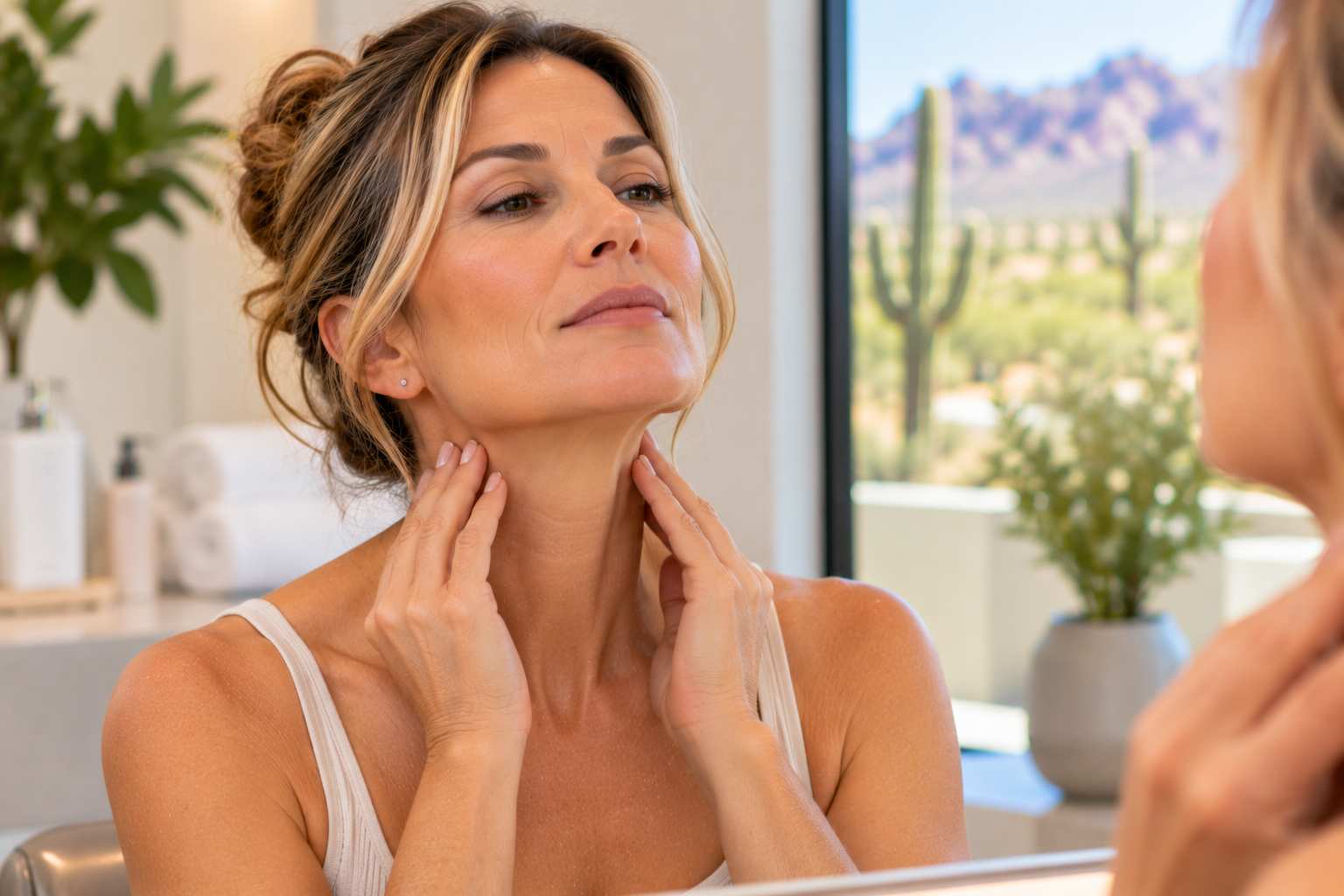
You keep your face in great shape. You wear sunscreen, you have a skincare routine that works, and maybe you have even tried a few treatments. Then a photo catches you at the wrong angle, or a video call shows you a side view, and you notice it: the skin on your neck looks thinner and more crinkled than the skin on your face. Your jawline seems a little softer than it used to be.
A crepey neck and early jowling are among the most common concerns we hear in Scottsdale, and they make sense here. The neck sees a lot of sun, gets far less skincare attention than the face, and tends to show laxity earlier than people expect. The good news is that non-surgical skin tightening can help firm and smooth skin gradually, without incisions.
Here is what causes neck laxity, what skin tightening can and cannot do, and how to decide whether it is the right fit for you.
What Makes Neck Skin Look Crepey?
Crepey neck skin happens when collagen and elastin break down, leaving the skin thinner, looser, and finely wrinkled like crepe paper. Sun exposure, natural aging, weight changes, and genetics all contribute. Because neck skin is naturally thinner than facial skin, it often shows these changes first.
Sun Exposure in the Sonoran Desert
MedlinePlus describes sunlight as a major cause of skin aging. In Scottsdale, where the sun is intense most of the year, UV exposure adds up quickly on the neck and chest, areas that often get missed when we apply sunscreen. Years of morning hikes on Camelback Mountain, rounds of golf, and poolside afternoons can show up as texture changes and loss of firmness.
Collagen Loss With Age
Collagen production slows gradually with age, and the skin also loses some of its supportive fat. For women, the drop in estrogen around menopause can accelerate collagen loss. This is one reason many women notice neck changes in their 40s and 50s, sometimes seemingly overnight.
Weight Changes and Posture Habits
Significant weight loss can leave skin that does not fully bounce back. Many people also spend hours each day looking down at phones and laptops. While posture alone does not cause laxity, repeated folding of the neck skin can make horizontal lines more noticeable over time.
What Is Non-Surgical Skin Tightening?
Non-surgical skin tightening uses radiofrequency or ultrasound energy to gently heat the deeper layers of the skin. That controlled heat encourages the body to produce new collagen and elastin. Over the following weeks and months, skin can look firmer, smoother, and more lifted.
At Source of Health, skin tightening treats the face, neck, forehead, the area around the eyes, and body contours. Treatment feels like warmth on the skin, and most people return to their day right afterward. Mild redness or a warm sensation is common and usually fades quickly.
How Many Skin Tightening Sessions Do You Need?
Most people need a series of 3 to 6 sessions, depending on how much laxity they have and the results they want. Collagen builds gradually, so improvements continue to develop after each session. Results can last about one to two years, with maintenance helping to sustain them.
Because your body is doing the rebuilding, this is not an overnight change. Many people notice that skin looks smoother and feels a bit firmer after the first few treatments, with more visible improvement as the series continues. Taking photos at your first visit and comparing them a few months later is often the best way to see the difference.
Can Skin Tightening Replace a Neck Lift?
No. Skin tightening can improve mild to moderate laxity and crepey texture, but it does not produce the same results as surgery. It is best suited for people who want gradual, natural-looking improvement without incisions or extended recovery. Significant sagging or excess skin usually needs a surgical consultation.
Being clear about this upfront matters to us. Non-surgical tightening is a great fit when you want to look refreshed, not "done," and when your concern is texture and early laxity rather than heavy loose skin. If your goals call for surgery, we will tell you so.
Who Notices Neck and Jawline Laxity Most?
Women going through perimenopause and menopause, busy professionals who see themselves on camera all day, and clients who want a polished, refined look often notice neck and jawline changes first. Men notice it too, especially as jawline definition softens. Each group tends to have slightly different priorities.
Women in Midlife
Hormonal shifts can speed up collagen loss, which is why many women see the neck change faster than the face. A plan for this stage often combines collagen-building treatments with excellent sun protection and skincare for the neck and chest. If you are also dealing with hot flashes, sleep changes, or other symptoms, our hormone replacement therapy evaluation can address the bigger picture.
Professionals on Camera
If you spend your day on video calls, you see your own neck and jawline more than any generation before you. Laptop angles are not flattering, and small changes feel bigger when you stare at them all day. Skin tightening fits well into a busy schedule because there is little downtime and no need to block off recovery days.
Clients Who Want Refined, Natural Results
Many of our Paradise Valley and North Scottsdale clients want a comprehensive, discreet approach that keeps them looking like themselves. For them, skin tightening often becomes part of a long-term maintenance plan, layered with other treatments and adjusted over time.
Men and Jawline Definition
For men, a defined jawline is often the main goal. Skin tightening can support firmness along the jaw and neck. When the concern is fullness under the chin rather than loose skin, Kybella may be the better match.
What Other Treatments Pair Well With Skin Tightening?
Skin tightening is often combined with other collagen-building or lifting treatments for more complete results. The right combination depends on whether your main concern is texture, laxity, volume, or all three. A personalized plan helps you avoid paying for treatments you do not need.
Options your provider may discuss include:
- Virtue RF microneedling, which combines microneedling with radiofrequency energy to target laxity, texture, and fine lines.
- PDO threads, a minimally invasive option that can lift sagging tissue along the jawline and neck while also stimulating collagen.
- Biostimulator injections such as Sculptra and Radiesse, which stimulate collagen gradually and may be discussed for facial firmness and areas like the lower face.
We start by understanding what is actually causing the change you see. Is it loose skin, lost volume, or both? You can learn more about this distinction on our sagging skin page and see how we approach the neck specifically.
How Do You Protect Your Results in Scottsdale's Sun?
Daily sun protection is the most important habit for protecting skin tightening results. UV exposure breaks down collagen, so it can undo some of the progress you have made. Apply sunscreen to your neck and chest every day, not just your face.
The American Academy of Dermatology recommends a broad-spectrum sunscreen with SPF 30 or higher, and water-resistant formulas for sweating or swimming. In Scottsdale, that means reapplying during long outdoor days, wearing a wide-brimmed hat, and seeking shade during peak afternoon hours. Extend your skincare routine down to your collarbone, too. Your neck deserves the same attention as your face.
Questions About Skin Tightening and Crepey Skin
Does skin tightening work on a crepey neck?
Yes, skin tightening can improve crepey texture and mild to moderate laxity on the neck by stimulating new collagen. Results build gradually over a series of sessions.
Is there downtime after skin tightening?
There is little downtime. Mild redness or warmth is common and usually fades quickly, so most people return to normal activities right away.
How long do skin tightening results last?
Results can last about one to two years. Maintenance treatments and consistent sun protection help preserve them.
At what age should I start skin tightening?
There is no single right age. Many people start when they first notice texture changes or early laxity, often in their late 30s to 50s.
Can I combine skin tightening with other treatments?
Yes. It is often paired with RF microneedling, PDO threads, or biostimulators, depending on whether you need lift, volume, or texture improvement.
Chin Up, Scottsdale: Your Neck Deserves the Spotlight Too
Your neck has been carrying your sun exposure, screen time, and life experience for years. It makes sense to give it some care. Non-surgical skin tightening offers a gradual, natural-looking way to restore firmness without incisions or a long recovery, especially when paired with smart sun protection.
If a crepey neck or softening jawline has been on your mind, book a consultation at Source of Health in Scottsdale or call (480) 361-4005. Browse our lasers and devices to see what else may fit your goals, and take a look at our before and after gallery for inspiration.